A supplier can offer you Tuesday morning in Foshan. Another has a production manager available on Wednesday in Shenzhen. Your cheapest flight lands in Guangzhou on Tuesday afternoon. Those three bookings do not make a workable itinerary.
Plan your China business trip around the decisions that need to happen in person. Confirm the important people and actual meeting addresses, group nearby visits, then fit transport and hotel stays around them. Leave enough room to record what you learned and recover when an appointment moves.
This guide covers the organization of a supplier visit trip. For entry requirements, arrival preparation and broader business travel to China, use the China business trip guide.
1. Decide what the trip must settle
Write a short answer to this question before contacting suppliers: What will we be able to decide after this trip that we cannot decide now?
“Meet more suppliers” is too open-ended to organize a week. “Compare two shortlisted suppliers against the same specification and agree the next sample step” gives every appointment a purpose.
| Your business objective | What needs to happen in person | What you should leave with |
|---|---|---|
| Compare shortlisted suppliers | Discuss the same product brief with people who can answer the key questions | Comparable notes, open issues and a dated follow-up list |
| Resolve a sample problem | Review the physical sample and the proposed changes with the relevant staff | A marked-up revision list and responsibility for the next sample |
| Understand a production process | Visit the relevant site while the process you need to see is operating | Recorded observations, access limits and questions requiring specialist follow-up |
| Maintain an existing relationship | Review current concerns with the commercial or technical decision-maker | Agreed actions, named owners and review dates |
Give each proposed visit a priority: essential to the trip’s decision, useful if it fits nearby, or suitable for a video call. When time becomes tight, remove the lowest-priority appointment first. Do not cut the time needed at your most important meeting just to keep a longer list of stops.
Set the spending limit too. Separate flights and accommodation from interpretation, vehicles, local transfers and any changes to bookings. A low daily transport quote is little help if the route repeatedly crosses the same city.
2. Build the city order from confirmed addresses
A supplier’s website address may be a sales office, showroom or registered address. Ask which location you will actually visit, whether production is elsewhere, and who will meet you there. Obtain the Chinese address, a map pin, the site contact and a working telephone number.
Put every proposed stop on one planning sheet:
- Supplier and purpose of the meeting.
- Actual address, district and map pin.
- Required attendees and their available dates.
- Expected meeting or visit length.
- Appointment status: requested, provisional or confirmed.
- Access conditions and the next person who must respond.
Start with the appointment that has the least flexibility: perhaps an engineer available on one day or a factory that can show the relevant process only during a particular shift. Group the other visits around it. Compare both directions of a multi-city route before booking return flights from your arrival city.
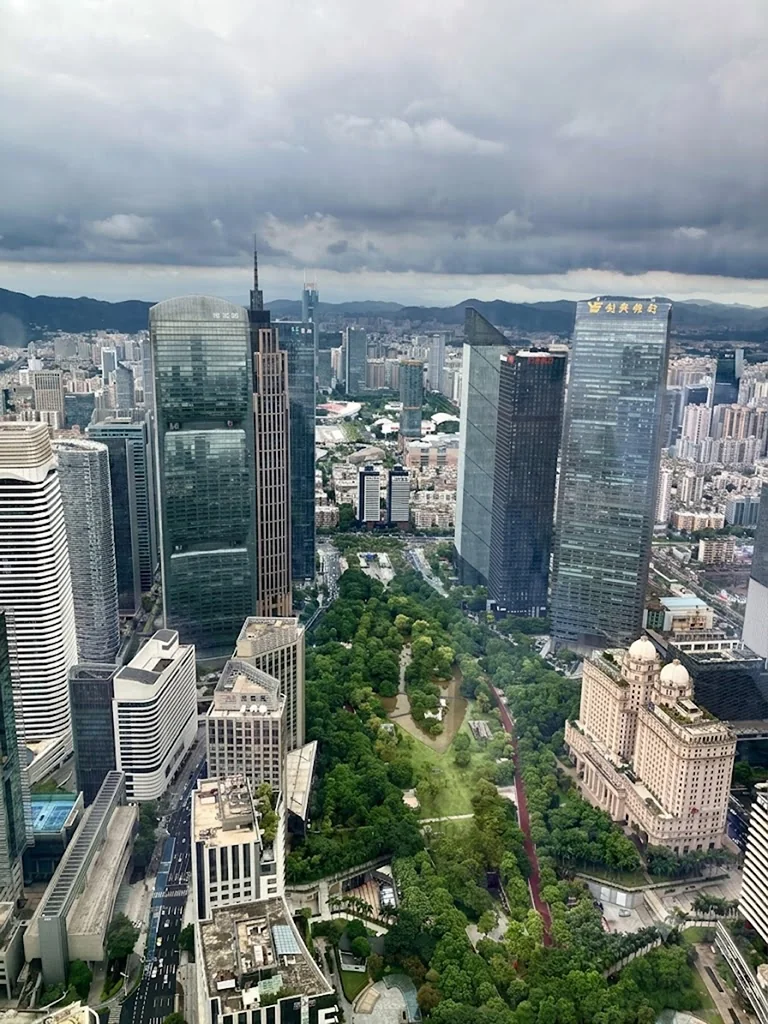
For Guangzhou, Foshan and Shenzhen, the best order depends on those exact stops. A route through all three cities can make sense; returning to Guangzhou after every visit can consume time you need for discussions. Choose a hotel base by the next day’s first important appointment and the evening transfer, rather than the city’s best-known business district.
If the route is mostly factory visits from Guangzhou, the Guangzhou factory visit routing guide covers the local routing detail. This page helps decide how those visits fit into the whole trip.

3. Give each supplier meeting a realistic time budget
There is no useful daily meeting target without the addresses and agenda. Two nearby showroom appointments are a different day from two production visits with separate security checks and long transfers.
Build a day from its parts:
Door-to-door transfers + access formalities + discussion or site time + breaks + note-taking + a recovery margin.
As a starting assumption, allow 60–90 minutes for a focused commercial discussion, then add interpretation time if needed. A technical review or factory visit may need substantially longer. These are planning allowances, not standard meeting lengths; agree the agenda and duration with each host.
For example, a 09:30–11:00 meeting followed by 20 minutes of notes and a 45-minute transfer cannot support an 11:30 arrival at the next supplier. Move that appointment, shorten the agenda by agreement, or drop it. Lunch, security and traffic still need space in the day.
Try a morning priority meeting and an afternoon priority meeting as an initial draft. Add another only if the route and agendas leave enough room. Use the guide to how many factories to visit per day when the stops involve production sites.
End each meeting by naming the next action, the person responsible and the date it is due. Keep a short debrief after each supplier so that quotations, samples and unresolved questions stay attached to the correct company.
4. Add a factory visit when it answers a specific question
A China factory visit is useful when something relevant cannot be resolved through documents, samples or an office meeting. You may need to see a particular production stage, discuss a sample change beside the equipment, or understand how the supplier describes its workflow.
Before reserving the day, ask:
- Is this the production site for the product under discussion?
- Will the relevant line or process be operating during the visit?
- Can the appropriate production or technical staff attend?
- Which areas can visitors enter, and what identification or protective equipment is required?
- Are photography, samples and technical documents permitted?
If the relevant process will not be running, decide whether a meeting still justifies the journey. A video discussion followed by a later site visit may be more useful than a tour that cannot answer your question.
Use the China factory visit checklist to prepare the site-level checks. A scheduled visit gives you access to what the host permits you to see; it does not establish supplier reliability or replace a formal audit, quality inspection or specialist assessment.
5. Prepare the interpreter before the first meeting
Choose interpretation support for the actual discussion. An introductory commercial meeting and a detailed review of materials, tooling or tolerances need different preparation. Confirm the language pair, relevant subject knowledge, working hours, travel between cities and any specialist requirements before agreeing the assignment.
Send a brief in advance: the purpose of the trip, the supplier list, the agenda, product specifications, annotated sample photographs and a glossary of terms. Identify the points that must be translated precisely, including units, dimensions, quantities and delivery wording. Agree how confidential material will be shared and handled.
For the meeting itself, use short speaking turns and pause for interpretation. Ask for important figures and actions to be written down. The interpreter helps the parties understand each other; your team retains responsibility for technical judgments and commercial decisions.
Decide who takes notes. Do not assume one person can interpret continuously, photograph samples and maintain a detailed comparison sheet at the same time. For broader communication preparation, see the China business etiquette guide.
6. Compare transport from one meeting door to the next
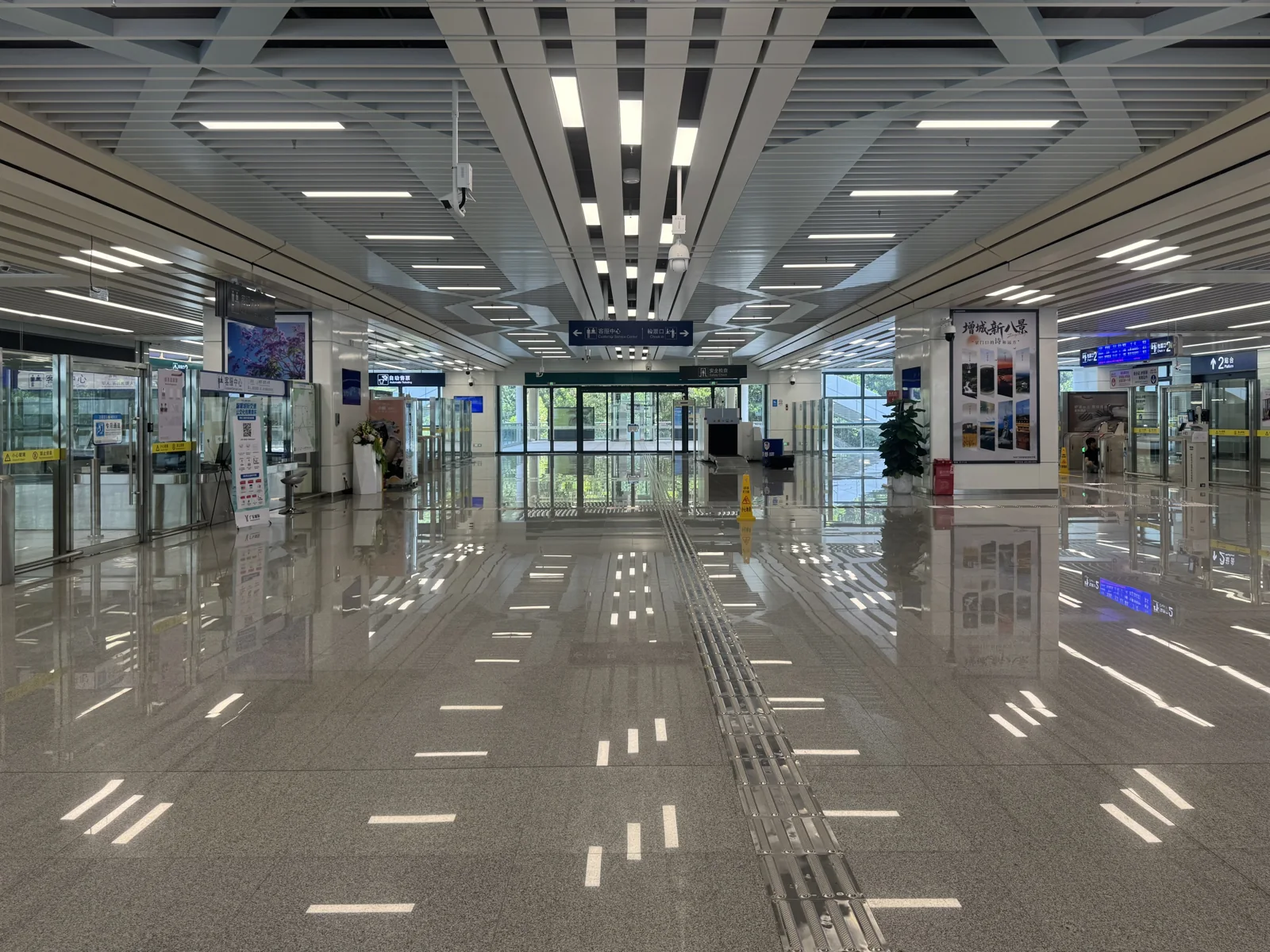
Compare the whole transfer, not just the train journey or the distance between city centers. Include the trip to the departure station, check-in and security, the train, arrival procedures and the final leg to the supplier. Check the exact station name; a ticket to the wrong station can undo an otherwise sensible route.
| Transport choice | Consider it when | Check before confirming |
|---|---|---|
| Vehicle and driver | Several stops need to be linked, samples are bulky, or sites are difficult to reach from stations | Full addresses, luggage and sample space, service hours, waiting time, parking, tolls and change terms |
| Intercity rail plus local transfers | A rail service connects the relevant areas and both station transfers are practical | Actual stations, current services, ticket availability, ID requirements and the final road transfer |
| Metro or taxi for an individual leg | A central meeting has a straightforward route and little equipment to carry | Walking distance, luggage, pickup point and a fallback if the route is disrupted |
China Railway’s English ticketing FAQ explains real-name ticketing and passport use. Carry the original valid document used for booking and check the current instructions for your journey. Verify live services before fixing appointments around them; this guide does not assume a particular train time or fare.
Move between cities after the last essential meeting when that leaves a comfortable arrival and rest period. If a transfer would turn the next morning’s meeting into a gamble, give the move its own block. Confirm driver and interpreter schedules together so that a changed pickup does not leave one part of the team in another city.

7. A five-day Guangzhou, Foshan and Shenzhen itinerary
Hypothetical planning example — not a QGO customer case or an account of an actual trip.
Assume a U.S. hospitality-products buyer has a furniture supplier’s sales office to meet in Guangzhou, a shortlisted furniture production site in Foshan, and an electronics accessories supplier in Shenzhen. The companies and appointments are hypothetical. Their addresses, access and staff availability would need confirmation before this route could be used.
The buyer arrives in Guangzhou on Day 0 and departs from Shenzhen on Day 6. The five days below are business days between those travel days. Entry eligibility, flights, accommodation and the actual working calendar are checked separately; the itinerary is not evidence of visa eligibility.
| Day / overnight base | Main work | What stays flexible | Decision or output |
|---|---|---|---|
| Day 1 · Guangzhou | Morning briefing, then the confirmed furniture supplier sales-office meeting | Afternoon sample comparison and one nearby follow-up only if it is needed | Confirm the questions and sample revisions to discuss at the production site |
| Day 2 · Foshan | Transfer to the confirmed factory address; visit the relevant process and meet the appropriate staff | Keep the rest of the day for the visit, notes and local travel | Record observations, unanswered technical questions and the next sample action |
| Day 3 · Shenzhen | Morning held for a necessary Foshan follow-up; transfer to Shenzhen afterward | Release the morning if no return visit is needed; keep the transfer free of a fixed supplier appointment | Close the furniture visit notes and arrive ready for the electronics discussion |
| Day 4 · Shenzhen | Priority technical and sample meeting with the electronics accessories supplier | A second nearby supplier only if confirmed addresses and agendas fit | Produce a separate comparison record for the electronics brief |
| Day 5 · Shenzhen | Resolve open items through confirmed follow-up meetings or calls; organize records and sample handover | Recovery space for one moved Shenzhen appointment | Assign owners and dates for quotations, revised samples and specialist checks |
This route follows the assumed meeting locations and avoids returning to Guangzhou after the Foshan visit. It leaves Day 3 as a transfer block and protects Day 5 for unresolved work. Furniture and electronics use separate specifications and comparison notes.
If the essential Foshan host can meet only on Day 4, rebuild the city order before booking. If a Shenzhen meeting moves to Day 5, use the local reserve and reduce optional work. Do not assume a cancellation in Foshan can be repaired by a quick return from Shenzhen. A buffer helps with a plausible change; it cannot absorb every change to the route.
8. Carry one meeting pack and one current schedule
Prepare a consistent pack for all supplier meetings in China: a short company introduction, the current specification version, labeled reference samples or photographs, realistic order quantities, target market, timing and the questions the visit needs to resolve. Put confidential information in a separate file and share it only with the people who need it.
Keep a compact visit record alongside that pack:
| Field | What to record |
|---|---|
| Meeting | Supplier, actual site, date, local time and attendees |
| Purpose | The decision or question this appointment supports |
| Evidence | Sample IDs, documents received and observations; distinguish these from supplier statements |
| Open items | What remains unanswered and who must clarify it |
| Next action | Responsible person, agreed deadline and where the written response will go |
Save the agenda, addresses and contact numbers offline. Mark every itinerary with a version and update time, and state that appointment times are local China time. Share one current version with your travelers, hosts, interpreter and transport contact.
Before the trip and again before each visit, reconfirm the host, location, arrival instructions and access conditions. Ask about public holidays, factory shutdowns and any event affecting the dates you have selected. Avoid treating an unanswered appointment request as a booking.
When a meeting moves
First establish what has changed: the time, the location, the required person or access to the process. Then test the alternatives against the trip’s objective.
- Protect the essential decision. If the technical lead cannot attend, decide whether the meeting should move or become an introductory call.
- Use a nearby reserve slot before moving the whole route. Check the revised door-to-door travel and the next fixed appointment.
- Confirm the effect on the interpreter, driver, hotel and tickets, including any change charges. Get agreement to additional work or cost before committing where practicable.
- Send the revised schedule with the changed items clearly marked and obtain acknowledgement from the affected people.
If there is no feasible slot, record the unresolved question and arrange a remote follow-up or a later visit. Filling the gap with an unrelated supplier does not necessarily make the trip more useful.
9. Brief China-side support with the route you need to make work
Local coordination is most useful when there is a defined job: confirming a host and address, connecting a factory visit with a supplier meeting, briefing an interpreter, or checking whether a city transfer fits the day.
QGO can coordinate business visit planning, supplier meeting scheduling support, factory visit arrangements, business interpreters, vehicles and drivers, and local arrival and transfer support within the confirmed project scope. Send your target dates, visitor numbers, product brief, supplier contacts, actual locations, meeting status and essential outcomes. Say which arrangements are already booked and where you need help.
If you do not yet have confirmed suppliers, identify that separately. Preliminary search and outreach are a different preparation task from scheduling visits to companies you have already selected.
QGO coordinates the visit; it does not act as your purchasing agent, factory auditor, quality inspector or legal adviser. Supplier access and third-party arrangements remain subject to availability and applicable written confirmation. The Service Scope explains these boundaries.
Have suppliers in mind but need the itinerary to fit? Request a proposal with your supplier list and travel window so QGO can review the coordination you need.