Canton Fair Business Visit Planning · 2026
How to Plan a Canton Fair Business Visit Before, During & After the Fair
A structured China sourcing mission: pre-booked supplier meetings, timed factory visits, multi-city routing and documented outputs.
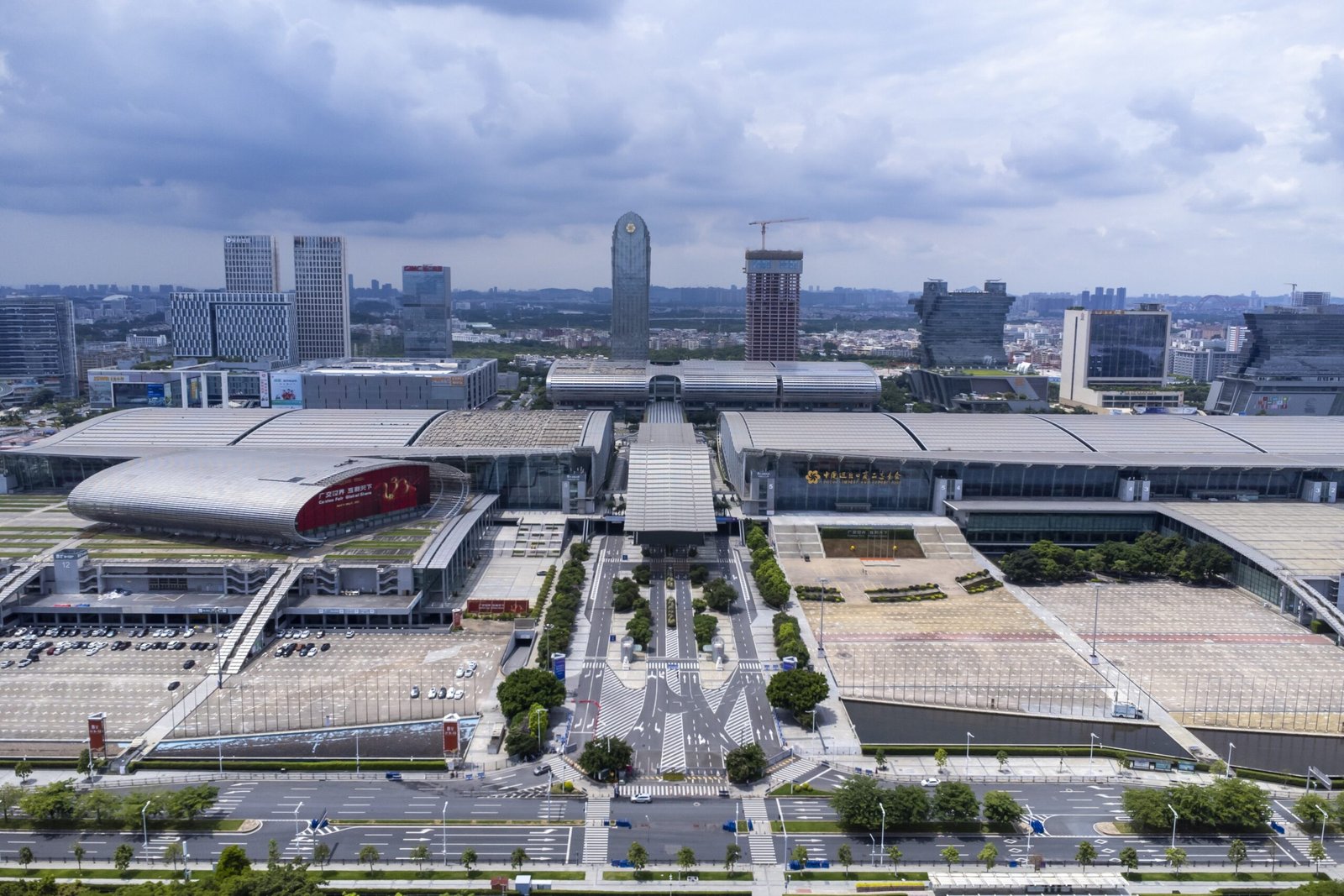
Planning snapshot
Quick Facts
Official Canton Fair Facts
- DatesOctober 15 – November 4, 2026
- Three phasesPhase 1 Oct 15–19 · Phase 2 Oct 23–27 · Phase 3 Oct 31 – Nov 4
- Inter-phase closuresOct 20–22 and Oct 28–30, 2026
- VenueChina Import and Export Fair Complex, 382 Yuejiang Zhong Road, Pazhou, Guangzhou
Practical Planning Guidance
- Business-visit planning windowIllustrative: a single-phase visit may extend beyond the fair dates for additional supplier or factory visits
- Guangdong factory-visit opportunityOct 20–22 and Oct 28–30 inter-phase periods are potential off-site visit windows
Confirmed against the official Canton Fair site and MOFCOM releases as of August 2026.
The spring session typically runs mid-April to early May in the same three-phase pattern. Always confirm dates on the official site before booking flights.
Registration steps, invitation letters, visas, hotels and venue navigation are covered in our first-time buyer guide to Canton Fair 2026. This article focuses on what most guides skip: turning the trip into a Canton Fair business visit with measurable outputs.
Note: the inter-phase closures are dead time at the fair but potential off-site visit windows. Section 5 turns that into a decision framework.
A Canton Fair business visit is a structured China sourcing mission: business objectives, pre-booked supplier meetings, factory visits, multi-city routing and documented outputs. The fair is its centerpiece. As an illustrative planning example, a single-phase business visit may extend beyond the fair dates to allow additional supplier or factory visits, depending on objectives, cities and confirmed scope. This guide is the complete operating plan.
Picture two buyers landing in Guangzhou this October.
The first treats the fair as the trip. She walks the halls for five days, collects sixty business cards, and flies home with a suitcase of catalogues. Three weeks later, her inbox is full of quotations she cannot compare, from suppliers she cannot verify.
The second treats the fair as one block inside a longer Canton Fair business visit. She arrives with twenty pre-screened suppliers and twelve booked meetings. She uses the fair to qualify, the inter-phase break to tour two factories in Foshan, and the week after the fair to deep-dive her final three candidates. She flies home with meeting minutes, a scored shortlist, and visit reports her board can actually read.
Same flight. Same fair. Completely different outcomes.
If you're attending the 140th Canton Fair, you already know it's overwhelming. 1.55 million square meters and 30,000+ exhibitors do not reward improvisation. What you may not have is a plan for everything around it. This guide is a step-by-step framework for planning a Canton Fair business trip across the three horizons that decide its ROI: before, during, and after the fair.
Key Takeaways - A Canton Fair business visit is a 7–14 day structured mission: fair days for your phase, plus 2–5 factory-visit days. The fair is for discovery and qualification. Decisions happen in factories and meeting rooms. - The 140th session runs Oct 15 – Nov 4, 2026 in three phases. The Oct 20–22 and Oct 28–30 inter-phase periods can create useful full-day windows for planned off-site supplier or factory visits, subject to supplier availability, route and confirmed appointments. - Book supplier meetings 2–4 weeks before you fly. Walking the halls unannounced is the most expensive way to use your time. - Factory visits can happen during the fair (Guangdong day trips, inter-phase windows) or after it (cross-province deep-dives). The right choice depends on supplier locations, category complexity and trip length. - A factory visit is not a factory audit. It builds commercial understanding; it does not replace QC inspections or formal supplier audits. The trip should end with deliverables (minutes, a scored shortlist, a visit summary), not business cards.
What Makes a Canton Fair Trip a Business Visit (Not Just a Fair Visit)
The fair puts more potential suppliers in front of you in five days than you'd find in five months of online sourcing. What it cannot do is tell you which factory can hold your tolerances, hit your lead times, or survive a conversation with your engineers. The fair is a discovery engine; a Canton Fair business visit turns discovery into decisions:
- Before the fair, you build the pipeline: objectives, supplier research, pre-booked meetings, factory-visit reservations, routes, interpreters, a realistic schedule.
- During the fair, you execute: targeted meetings, fast qualification, second meetings, Guangdong factory visits in the inter-phase windows.
- After the fair, you verify: deep-dive visits to shortlisted suppliers, formal meetings, documented minutes, a visit summary you can act on back home.
(Suggested visual: horizontal Before/During/After timeline showing inputs and deliverables per stage.)
Buyers who skip the "before" phase wander. Buyers who skip the "after" phase guess. The rest of this guide walks each horizon in execution order.
The framework
One Visit, Three Horizons
01
BEFORE
Prepare
- Objectives
- Suppliers
- Meetings
- Routes
02
DURING
Execute
- Canton Fair
- Meetings
- Shortlisting
- Guangdong visits
03
AFTER
Go Deeper
- Finalists
- Multi-city visits
- Deeper meetings
- Deliverables
Detailed steps for each horizon follow below.
Before the Fair — Build Your Supplier Pipeline (Weeks 6–2 Out)
A Canton Fair business visit is won or lost before you board the plane. Here is the pre-fair sequence, roughly six to two weeks out. Treat this sequence as your Canton Fair trip planning backbone; every later decision hangs off it.
Plan
1. Define the business objective before booth targets
Ask one question first: what decision must this trip produce? "Find a supplier for our new cookware line by December" is a business objective. "See what's out there" is a tourism objective. Every downstream choice (phase, suppliers, factory days, cities) flows from that statement.
2. Lock target product categories to the right phase
Phase 1 covers advanced manufacturing (machinery, electronics, vehicles). Phase 2 covers home-life categories (furniture, décor, houseware, gifts). Phase 3 covers better-life consumer goods (textiles, garments, food, personal care). Mapping shifts by session, so verify yours in the official exhibitor directory on cantonfair.org.cn before booking flights. Our first-time buyer guide details the phases.
If your list spans two phases: attend both, split the team, or prioritize one and cover the rest through factory visits. There is no fourth option called "rush both badly."
3. Supplier research and first-pass screening
Start with the official exhibitor directory and app on cantonfair.org.cn. For each candidate capture booth number, product range, claimed manufacturer status, export markets and relevant certifications. Then screen ruthlessly: longlist 15–30, contact 8–12, confirm 5–8 meeting targets through pre-fair outreach.
Prepare
4. Contact suppliers before you fly
Two to four weeks before the fair, send each shortlisted supplier a short, specific message: who you are, what you source (volumes, specs, markets), which phase you'll attend, and a request for a timed booth meeting. Vague "we are interested" emails get vague replies. Specific inquiries get calendar slots. Responses will be uneven, and how a supplier handles outreach is itself qualification data.
5. Book on-site meetings — and pre-plan the second meetings
Aim for 3–5 scheduled meetings per fair day, not ten. Walking time across a 1.55M m² venue eats schedules alive. Cluster meetings by hall, leave buffer slots for walk-ins, and reconfirm 2–3 days before your phase opens. Handle badge logistics (pre-registration, invitation letter, off-site pickup at airport or rail station) weeks ahead, so Day 1 starts with meetings.
6. Plan factory visits in advance — not from your hotel room
Factory slots during fair weeks are in high demand. You're competing with every other buyer in town. Pre-book visits 2–4 weeks out; confirm contact, address and agenda in writing; state what you want to see (production floor, QC stations, warehouse, relevant lines). A structured visit request gets taken far more seriously than "can we come tomorrow?"
Build the Route
7. Route planning: Guangzhou base + Pearl River Delta geography
Guangzhou is your base, and much of South China's manufacturing sits within day-trip range.
Foshan sits roughly an hour from Pazhou (approximate, traffic-dependent). It is the center for furniture, ceramics and building materials.
Dongguan is roughly 1–1.5 hours out. It covers electronics and hardware.
Zhongshan and Shenzhen are reachable for day or overnight trips.
(Suggested visual: PRD map with indicative travel times from Guangzhou.)
Suppliers in Zhejiang, Jiangsu or Fujian are a different problem. Post-fair multi-city routing covers that below.
8. Interpretation needs assessment
Match the interpreter to the conversation. Booth chats need product-level fluency and stamina. Factory-floor discussions need technical vocabulary (tooling, tolerances, process control) in your industry's terms. Rates and formats vary widely, so budget early and prioritize subject-matter fit over price for factory visits.
9. Build a realistic day-by-day schedule
A sample 10-day skeleton for a single-phase buyer (adjust to your phase dates):
| Days | Block | Focus |
|---|---|---|
| Day 1–2 | Arrival + setup | Badge pickup, venue recon, final confirmations |
| Day 3–6 | Fair days (your phase) | 3–5 booked meetings/day, live shortlisting, second meetings |
| Day 7–9 | Inter-phase window | 2–3 Guangdong factory visits (Foshan/Dongguan day trips) |
| Day 10 | Wrap | Consolidate notes, confirm post-fair deep-dive plan, or fly home |
This pre-fair pipeline (supplier research, outreach, meeting scheduling, factory-visit pre-planning, routing and interpretation logistics) is what QGO Business's Pre-Show / Pre-Visit service division executes as a modular service, engageable on its own, for buyers who prefer to arrive with the pipeline already built.
Need help structuring your Canton Fair business visit? QGO's Pre-Show team builds supplier shortlists, books meetings and maps routes before you fly — as a standalone service. Get Planning Support →
Day-trip range
Pearl River Delta Routing
Indicative travel times — traffic-dependent. Post-fair cross-province trips need sequencing.
Illustrative Example
A Sample 10-Day Schedule
Example only — adjust to your phase dates. Not a universal itinerary.
QGO’s Pre-Show / Pre-Visit service division can support supplier research, meeting coordination and visit planning within the confirmed scope.
If You Only Have Two Days
Two days is enough to work one phase properly — if you arrive prepared. The workable pattern is three to five pre-booked booth meetings per day, clustered by hall, with no hall wandering at all. What two days will not do is cover more than one phase or add factory visits; those need separate days. The decisive factor is not the days, it is whether your shortlist was built before you flew. Arrive with screened candidates and two days can produce a qualified shortlist. Arrive cold and two days mostly produces catalogues.
If You Only Have One Day at the Fair
One day works only with a plan built before you land. Decide which halls matter, shortlist the exhibitors you will actually see, and book timed meetings — then treat everything else as optional. Expect three to five real meetings rather than ten: the venue is 1.55 million m², and walking time between halls is the binding constraint, not meeting length. QGO can build a timed booth route from your product list within the confirmed project scope, subject to exhibitor availability. See the fixed packages.
During the Fair — Run It Like a Business Schedule
Once the halls open, your Canton Fair business visit shifts from planning to execution.
Targeted booth meetings, not hall wandering
Your fair days have one job: convert pre-booked meetings into a better-informed shortlist. Walk-in discovery is what buffer slots are for. Some finds will be unplanned, but they should stay the exception.
Qualify fast: manufacturer vs trading company, capability red flags
In each meeting, establish early whether you're talking to a manufacturer or a trading company (both can be valid partners, you just need to know which). Check their main export markets, their MOQ logic, and whether the person across the table can answer technical questions or only commercial ones. Evasive answers on factory location or capability are qualification data.
The second-meeting strategy
The fair's most underrated move: for any supplier that passes first qualification, book a second, longer meeting — later that day at the booth, or that evening at your hotel. First meetings are auditions. Second meetings are where specs, pricing logic and lead times actually surface. Suppliers read the request as a serious-buyer signal, because it is one.
Build your shortlist in real time
Score every supplier the same day you meet them: product fit, capability signals, communication, price position. By the close of your phase, the list should be narrowing from 5–8 candidates down to 3. A shortlist built three weeks later from business cards is archaeology, not sourcing.
Factory visits during the fair: the inter-phase windows
If your suppliers are in Guangdong, the fair itself creates your factory-visit calendar. When the halls close for setup and teardown (Oct 20–22 and Oct 28–30, 2026), the fair stops competing for your time and for factory management's attention. Day trips to Foshan or Dongguan fit inside these windows. Whether to use them now or wait until after the fair is the subject of the next section.
Factory Visits During or After the Canton Fair — How to Decide
During Your Fair Period
- Guangdong / Pearl River Delta
- Shorter routing
- Maintain meeting momentum
- Built around the fair schedule
After Your Fair Phase
- Cross-province / multi-city
- Deeper meetings
- More specialized requirements
- Richer documentation where included
Here is a direct answer. Visit factories during the fair if your candidates are in Guangdong and you want momentum. Visit after the fair if your shortlist is cross-province, technically complex, or needs the factory's undivided attention. Many well-run Canton Fair business visits do both.
For the step-by-step of executing those visits — what to see on the factory floor, what to discuss, what to document, and what a visit can and cannot prove — see our factory visit execution guide.
During-fair visits: pros and cons
Pros: Momentum. You met them yesterday, you see the factory today. Inter-phase windows give full days without sacrificing fair time, and Guangdong suppliers are day-trip close.
Cons: Factory senior staff are often at the fair themselves. You may get the sales manager instead of the general manager. Visits are compressed, and you're one of many buyers touring that week.
After-fair visits: pros and cons
Pros: Full attention. Leadership is back at the factory. Deeper access: production floor, QC process, engineering discussions, formal meetings. Cross-province routing becomes feasible. You arrive with a settled shortlist, so every visit day goes to a genuine finalist.
Cons: A longer stay (or second trip), and momentum cools between booth and factory. Without qualification discipline, you risk spending visit days on suppliers who should have been screened out at the fair.
Decision matrix
What a proper factory visit includes
Depending on supplier access, meeting objectives and the confirmed scope, a useful factory visit may include production-area observation, product and process discussions, a management or commercial meeting, and structured visit notes.
Planning factory visits around your fair dates? QGO Business executes factory visits both during the fair (Guangdong day trips, inter-phase windows) and after it (cross-province deep-dives). These are separate, combinable services matched to your actual schedule. Plan My Schedule →
| Factor | Lean "during the fair" | Lean "after the fair" |
|---|---|---|
| Supplier locations | Guangdong / PRD only | Cross-province, multi-city |
| Category complexity | Standard products, fast evaluation | Technical products, engineering-level discussions |
| Shortlist size | 2–4 candidates | 4–8 candidates needing depth |
| Trip length available | 7–10 days | 12–14+ days (or second trip) |
| Management access needed | Sales-level sufficient | General manager / owner involvement required |
Discuss Your Fair + Factory Visit Schedule
Factory visits around your fair dates?
QGO Business executes factory visits both during the fair (Guangdong day trips, inter-phase windows) and after it (cross-province deep-dives) — separate, combinable services matched to your actual schedule.
After the Fair — The Deep-Dive Phase
Once your relevant fair phase ends, the following days can be used for deeper supplier and factory visits where appropriate, depending on your shortlist, geography and confirmed appointments.
Deep-dive visits to shortlisted suppliers
Take your final three (or so) and go deep. Run half-day or full-day visits covering the four elements above, plus the specific lines, tooling and QC stations behind your product. This is where "can they make it?" becomes "here is how they will make it."
Multi-city, cross-province routing
If your shortlist spans regions (a furniture finalist in Foshan, hardware in Dongguan, textiles in Zhejiang), sequence by geography, not preference. Cluster nearby cities, minimize backtracking, and put the most decision-critical visit last, when your evaluation eye is sharpest. High-speed rail and domestic flights make two or three city clusters realistic inside one week. Build transfer days into the plan.
Formal meetings with industry interpreters
Post-fair meetings go deeper than booth talk: contracts, tooling ownership, payment terms, engineering changes. General fair interpreters often can't carry this. Use an interpreter with your industry's vocabulary, briefed on your agenda and terminology beforehand. For the complete guide to hiring, choosing, and briefing an interpreter, see How to Hire a Canton Fair Interpreter in Guangzhou.
Documentation discipline and deliverables
After every visit and formal meeting, write minutes the same day. Record attendees, what was seen, what was agreed, open questions, next actions and owners. Share them with the supplier for confirmation. The written record exposes misunderstandings while you're still in China to fix them.
Then, before flying home, compile the outputs your stakeholders will actually read: a scored shortlist with next actions, per-factory visit summaries and an overall trip report. If you can't list your deliverables before boarding, the trip isn't finished.
After you fly home
Follow-up (quotations, samples, first orders) begins within 48 hours of landing and deserves its own playbook. The in-China execution above makes it fast: you're following up on better-evaluated supplier candidates.
Post-fair execution (deep-dive factory visits, multi-city routing, industry interpreters, meeting minutes, visit documentation) maps to QGO Business's Post-Show / Deep-Dive service division. Like Pre-Show, it is modular: buyers regularly engage it on its own, even after self-managing the earlier phases.
Factory Visit ≠ Factory Audit
One clarification that saves buyers real money: a business factory visit is not a factory audit. A visit builds commercial understanding (capability, capacity, communication, chemistry). It is not a quality-systems audit, a social-compliance audit, a QC inspection, legal due diligence or formal supplier verification. If your order size or risk profile calls for formal auditing or third-party inspection, commission that separately. Confusing the two is how buyers talk themselves into skipping due diligence they needed.
Common Planning Mistakes That Waste a Canton Fair Business Visit
Five patterns account for most wasted Canton Fair business visits. Most can be traced back to treating a sourcing trip like a trade-show stroll.
- Treating the fair as the whole trip. No pre-fair outreach, no post-fair verification. Just hall walking and catalogues.
- No meeting discipline. Zero pre-booked meetings, or ten a day. The first wastes the fair; the second ignores venue geography.
- Ignoring the inter-phase windows. Buyers fly home during Oct 20–22 and Oct 28–30. Those inter-phase periods can create useful full-day windows for planned off-site supplier or factory visits, subject to supplier availability, route and confirmed appointments.
- Confusing a factory tour with due diligence. A showroom-and-lunch visit becomes the basis for a six-figure order.
- No deliverables. The trip ends with business cards and memory instead of minutes and next actions. Follow-up starts from zero.
Canton Fair Business Visit Checklist
Before (weeks 6–2 out)
- Business objective written: the decision this trip must produce
- Categories mapped to the correct phase; dates verified on the official site
- Supplier funnel: longlist 15–30, contact 8–12, meeting targets 5–8
- Outreach sent 2–4 weeks ahead; meetings reconfirmed 2–3 days before your phase
- Factory visits pre-booked with written agendas; inter-phase windows reserved
- Routes mapped: Guangzhou base + PRD day trips; post-fair cities sequenced
- Interpretation needs assessed separately for fair vs factory sessions
- Day-by-day schedule built with buffer slots and transfer days
- Badge, registration, visa and hotels done (see the Canton Fair registration and badge guide)
During
- 3–5 scheduled meetings per fair day; buffer for walk-ins
- Manufacturer-vs-trader and capability qualification in every meeting
- Second meetings booked for all first-pass candidates
- Live scoring; shortlist narrowing 5–8 → 3 by phase close
- Guangdong factory visits executed in inter-phase windows where planned
After
- Deep-dive visits to shortlisted suppliers (floor walk, QC, management meeting)
- Industry interpreter briefed for formal/technical sessions
- Same-day minutes for every visit, confirmed with the supplier
- Deliverables compiled: shortlist, visit summaries, trip report
- Follow-up cadence set for the first 48 hours back home
How QGO Business Can Support Your Canton Fair Business Visit
The framework above is yours to run. Many buyers execute it in-house. Where an on-the-ground team helps is capacity: research, outreach, scheduling, routing, interpretation and documentation all happen in China, in Chinese business hours, often in Mandarin.
QGO Business supports Canton Fair business visits through three independent service divisions: Pre-Show / Pre-Visit, During-Show, and Post-Show / Deep-Dive. Each is purchased separately. They can be combined, but no service division is automatically bundled into any other. The exact scope is defined in the project documents you confirm before work begins. Depending on that confirmed scope, support can include supplier pre-visit screening, meeting scheduling, factory-visit coordination, interpretation and vehicle arrangements, and structured visit documentation. Each is a modular capability, never an assumption.
The honest way to choose: start with whichever horizon you can't execute well yourself, and engage only that service division.
Conclusion: The Fair Is 5 Days. Your Business Visit Is the Trip Around It.
The reframe is simple: the Canton Fair is the centerpiece of a structured Canton Fair business visit, not the entire trip. Build the supplier pipeline before you fly. Run the fair during like a schedule, and use the inter-phase closures for what they are: Guangdong's potential off-site visit windows. Then stay for the after: deep-dive visits, formal meetings, and documented deliverables that turn a shortlist into decisions.
Buyers who do this don't come home with business cards. They come home with a better-evaluated shortlist, clearer visit findings and defined next steps.
If any horizon is more than your team can execute alone, QGO Business's Pre-Show / Pre-Visit, During-Show and Post-Show / Deep-Dive service divisions each handle their piece. They are independently bookable, combinable, and scoped in writing before work begins. Start with the part you can't do yourself.
Written by QGO Business Editorial Team | Reviewed by QGO Business Operations | August 2026
Sources
- Canton Fair official website (dates, phases, venue, buyer registration): cantonfair.org.cn/en-US
- Official attendance guide for overseas buyers: cantonfair.org.cn/en-US/pages/598494791797825536
- Ministry of Commerce of the PRC, Canton Fair session releases: is.mofcom.gov.cn
Last updated: August 2026. Always confirm session dates and registration requirements on the official Canton Fair website before booking travel.
Plan Your Canton Fair Business Visit
Tell us your fair dates and product categories. We'll map the meetings, factory visits and routing around them.