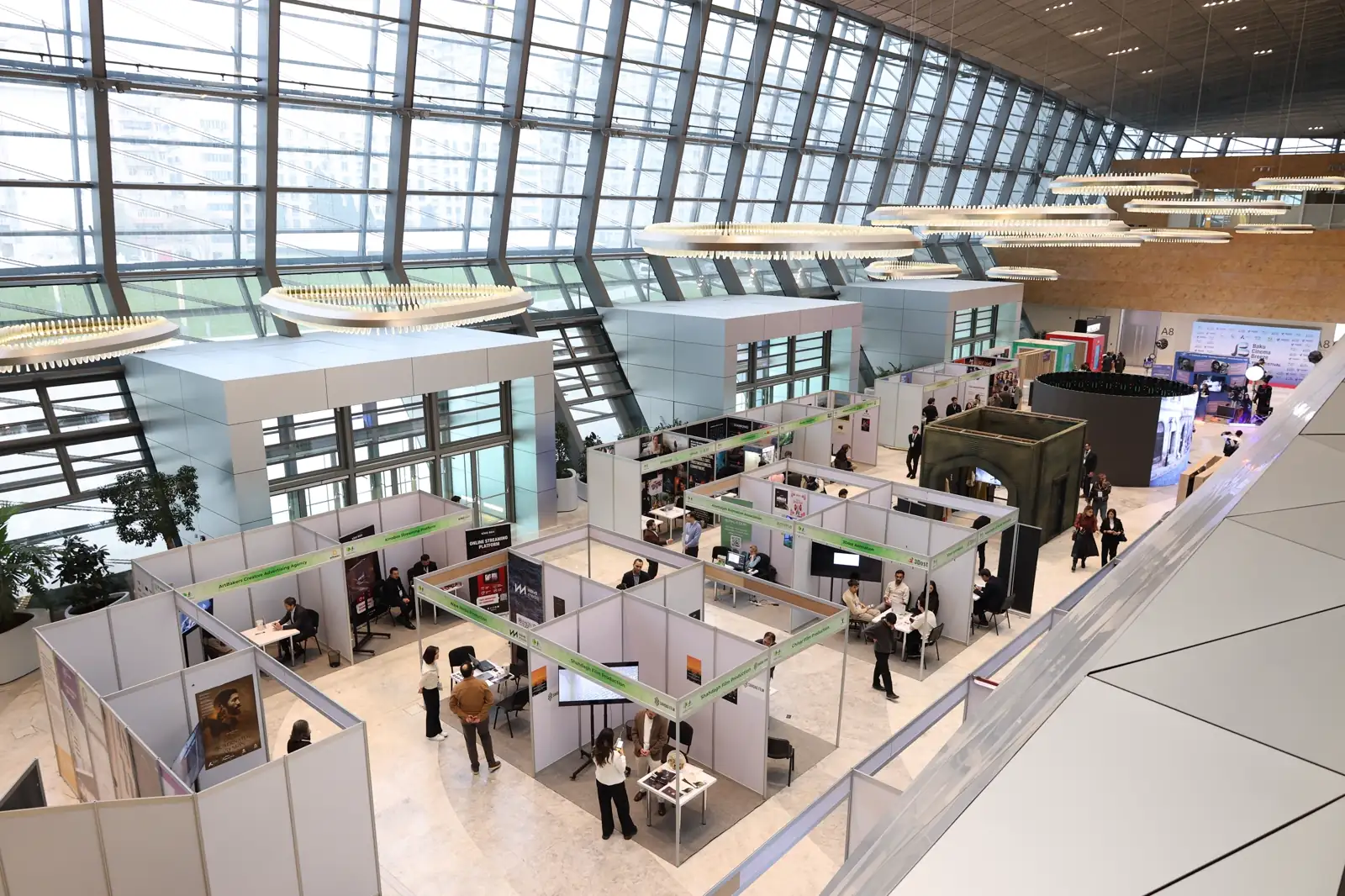
In This Guide
What Is the Canton Fair — And Why Do Buyers Attend?
The Canton Fair — officially the China Import and Export Fair — is China's largest comprehensive international trade event and one of the world's major sourcing fairs. Held twice a year in Guangzhou, it brings together tens of thousands of Chinese manufacturers and hundreds of thousands of overseas buyers under one roof.
For a first-time buyer, the fair is the most efficient way to meet a large number of potential suppliers in a single trip. Instead of traveling across China to visit individual factories — which takes weeks and costs thousands of dollars — you can walk through exhibition halls organized by product category, compare suppliers side by side, collect samples, and decide who's worth visiting in person after the fair.
The fair is structured so you can spend a few days focused on your specific product category, then extend your trip to visit the factories that impressed you most.
Canton Fair 2026 Dates & Phases — Which One Matches Your Products?
The Autumn 2026 session is the 140th Canton Fair. It runs in three consecutive phases, each covering different product categories. Between phases, the exhibition halls close for three days while exhibitors change over.
| Phase | Dates (2026) | Product Categories |
|---|---|---|
| Phase I | October 15–19 | Electronics, household appliances, industrial automation & intelligent manufacturing, new energy vehicles & smart mobility, hardware, tools, machinery, power equipment, new materials & chemicals |
| Phase II | October 23–27 | Household ceramics, kitchenware & tableware, home decorations, festival products, gifts & premiums, glass artware, gardening products, clocks & watches, building & decorative materials, sanitary & bathroom equipment, furniture |
| Phase III | October 31 – November 4 | Textiles & garments, footwear, office supplies, bags & cases, recreation products, medicines & health products, food, sports & travel products, maternity & baby, fabrics & home textiles, personal care products, toiletries, pet products & food |
Changeover periods: October 20–22 and October 28–30. The complex is closed to visitors on these days. Opening hours are 9:30 AM to 6:00 PM daily.
How to decide which phase to attend: Match your main product category to the phase table above. If you source electronics and also buy packaging, plan to attend Phase I and stay through the changeover for Phase II — or come back. Some buyers attend two phases in one trip; others focus on a single phase and plan a second trip for spring. If your product spans multiple phases, budget extra days and consider whether you need different interpreters for different industries.
A note on timing: Give yourself at least one full day to settle in before the fair starts. Jet lag, registration, and getting oriented in Guangzhou take time. If you land the morning of Day 1, you'll be exhausted and disoriented — not the state you want for your first supplier meetings.
Electronics, household appliances, industrial automation & intelligent manufacturing, new energy vehicles & smart mobility, hardware, tools, machinery, power equipment, new materials & chemicals
Household ceramics, kitchenware & tableware, home decorations, festival products, gifts & premiums, glass artware, gardening products, clocks & watches, building & decorative materials, sanitary & bathroom equipment, furniture
Textiles & garments, footwear, office supplies, bags & cases, recreation products, medicines & health products, food, sports & travel products, maternity & baby, fabrics & home textiles, personal care products, toiletries, pet products & food
How to Register — Step-by-Step for Overseas Buyers
Registration is straightforward but must be done correctly. Here's what you need.
Who Can Register
The overseas buyer badge is available to anyone holding a valid foreign passport (with at least one year of remaining validity), a Mainland Travel Permit for Hong Kong/Macau/Taiwan residents, or a Chinese passport with valid overseas permanent residence. If your situation falls outside these categories, check the official buyer service system at buyer.cantonfair.org.cn.
Registration Options
Overseas buyers should pre-register through the official Canton Fair Buyer Service System. Badge procedures and any applicable fees should be checked against the latest 140th Canton Fair attendance guidance before travel. Pre-registration is the recommended path — it saves time on arrival and is typically free for overseas buyers.
What You Need
- A valid passport (scanned or photographed clearly)
- A recent passport-style photo (5cm × 4cm, digital)
- A business card (scanned or photographed — this verifies your professional identity)
Step-by-Step Process
- Go to buyer.cantonfair.org.cn and select your identity type
- Fill in your personal information, passport details, and company information
- Upload your photo and business card scan
- Submit your pre-registration. You'll receive a confirmation by email
- When you arrive at the fair, visit the registration hall with your passport and confirmation. The badge is issued against your original ID document
Pre-registration is completed online before you travel; the physical badge is issued against your original ID document and your pre-registration QR code. Badges can be collected at the fair complex itself, and most sessions also operate alternative registration offices outside the complex — such as Guangzhou Baiyun International Airport, Guangzhou South Railway Station, the Pazhou ferry terminal, designated Canton Fair hotels and the Canton Fair Hong Kong Representative Office — so buyers arriving early can collect before the fair opens. Confirm the current arrangement and locations in the official Buyer Service System before you fly.
Because the complex is large and organised into several areas, the official Buyer Service System lists the exact registration location and opening hours for the current session. English-speaking information desks inside the complex can also direct you if you arrive without a clear plan.
The badge is a physical IC card. In past sessions, buyer badges could be reused across multiple Canton Fair sessions. Check the latest 140th session guidance for current badge validity and re-entry rules.
If your badge is lost or damaged during the fair, visit the registration office with your passport for assistance.
A separate badge category exists for accompanying personnel — typically Chinese-national interpreters and assistants hired by overseas buyers. This badge has its own fee structure and rules. Your own overseas buyer badge is not affected by this.
Official registration portal: buyer.cantonfair.org.cn
Go to buyer.cantonfair.org.cn and select your identity type
Fill in your personal information, passport details, and company information
Upload your photo and business card scan
Submit your pre-registration. You'll receive a confirmation by email
When you arrive at the fair, visit the registration hall with your passport and confirmation. The badge is issued against your original ID document
Before You Book Your Flight
If you are flying from the US or another long-haul market, confirm three things before you pay for travel. First, whether your nationality currently qualifies for visa-free business entry — check your local Chinese embassy or the National Immigration Administration, not a blog. Second, which phase matches your product category, because the three phases cover different industries and do not overlap. Third, how early hotel rates near Pazhou rise: the closest hotels can sell out six to eight weeks out. Register for the fair first, then book flights and accommodation. Entry rules and phase dates can change between sessions, so verify them on official sources before committing.
China Entry Requirements — What to Check Before You Travel
Entry requirements for China have changed significantly in recent years. Do not assume you need a visa — and do not assume a particular visa category applies without checking your specific situation.
Step 1: Check Whether You Qualify for Visa-Free Entry
China currently offers short-term visa-free entry for ordinary passport holders from a number of countries for purposes including business, tourism, exchange and transit. The list of eligible nationalities, permitted stay durations and allowed activities is set by Chinese authorities and may be updated.
Before applying for any visa, check whether your nationality currently qualifies for visa-free business entry through:
- Your local Chinese embassy or consulate website
- The National Immigration Administration (NIA) at en.nia.gov.cn
- The China MFA consular services portal
Step 2: If a Visa Is Required
If your nationality does not qualify for visa-free entry, the M visa is the common visa category for commercial and trade activities — including attending trade fairs, visiting factories and conducting business meetings.
Standard application documents typically include:
- Valid passport (at least 6 months remaining validity, with blank visa pages)
- Completed visa application form
- Recent passport photo
- Invitation or supporting documents (see below)
- Flight and hotel booking confirmations (required by some embassies/consulates)
If you need a visa, apply 4 to 6 weeks before your planned travel date. Processing times vary significantly by country and consulate, and volumes surge in the weeks leading up to the fair.
Invitation Letter for the Canton Fair
First-time and returning overseas buyers can use the official Canton Fair Buyer Service System at buyer.cantonfair.org.cn to apply for attendance and, where applicable, a Canton Fair invitation. The invitation — if issued — includes your name, nationality and company details and may support your visa application.
240-Hour Visa-Free Transit (Separate Policy)
China also operates a 240-hour (10-day) visa-free transit policy for citizens of 55 countries, available at 65 designated ports of entry. This is specifically for travelers transiting through China to a third country or region. It is a separate policy from general visa-free entry.
None of the above information replaces official guidance. Entry policies, eligible nationalities, permitted ports, allowed stay zones and required documentation are set and updated by the National Immigration Administration (NIA) and Chinese diplomatic missions. Always check your specific eligibility against current official sources before booking travel. Policies are subject to change.
Sources: buyer.cantonfair.org.cn, en.nia.gov.cn, english.www.gov.cn, Chinese MFA consular services
How Much Does It Cost? — Estimated Budget for a Canton Fair Trip
The total cost of attending the Canton Fair depends heavily on where you're flying from, how long you stay, and whether you arrange everything independently or use a bundled service. Below are estimated reference ranges based on publicly available travel data. These are not fixed prices — actual costs vary by season, booking time, and personal choices.
| Expense | Estimated Reference Range | Notes |
|---|---|---|
| Round-trip flights | $500–2,000 | Varies dramatically by origin country, airline, and how early you book |
| Visa fee | $30–150 | Depends on nationality and visa type |
| Buyer badge | Pre-registration is typically free for overseas buyers. Check latest 140th session guidance for current procedures and any applicable fees. | |
| Hotel (4–5 nights) | $400–1,500 | Market reference only. Rates often rise significantly during Canton Fair periods, especially near the Pazhou Complex. Book early. |
| Local transport | $100–500 | Metro is inexpensive; taxis and private vehicles cost more |
| Food | $150–400 | 5–7 days, depending on preferences |
| Interpreter | Varies | Costs depend on language, experience, working hours, and whether technical or business expertise is required. English interpretation is generally more available than other languages. |
| Factory visit logistics | $200–800 | Depends on distance, number of factories, and whether you hire a vehicle and interpreter |
All figures above are for reference only and should not be taken as fixed prices.
Two Ways to Approach Your Trip
Arranging everything independently means booking your own flights, researching and reserving hotels yourself, navigating Guangzhou's metro and taxi system, finding an interpreter through a platform or referral, and coordinating factory visits on your own. This gives you full control but requires managing multiple bookings, confirmations, and logistics across different providers — in a country where you may not speak the language.
A bundled China-side execution service handles the in-country portion of your trip within a single reservation. QGO Business offers fixed-price Canton Fair packages that include hotel accommodation according to the selected package, transport arrangements, English business interpretation (on applicable packages), and factory visit coordination. Rather than piecing together hotel, transport, and interpreter from separate providers, everything on the China side comes through one point of contact.
Bundled execution doesn't necessarily cost less than doing everything yourself. What it provides is clear scope — you know exactly what's covered and what isn't — and a single team handling the logistics so you can focus on your supplier meetings.
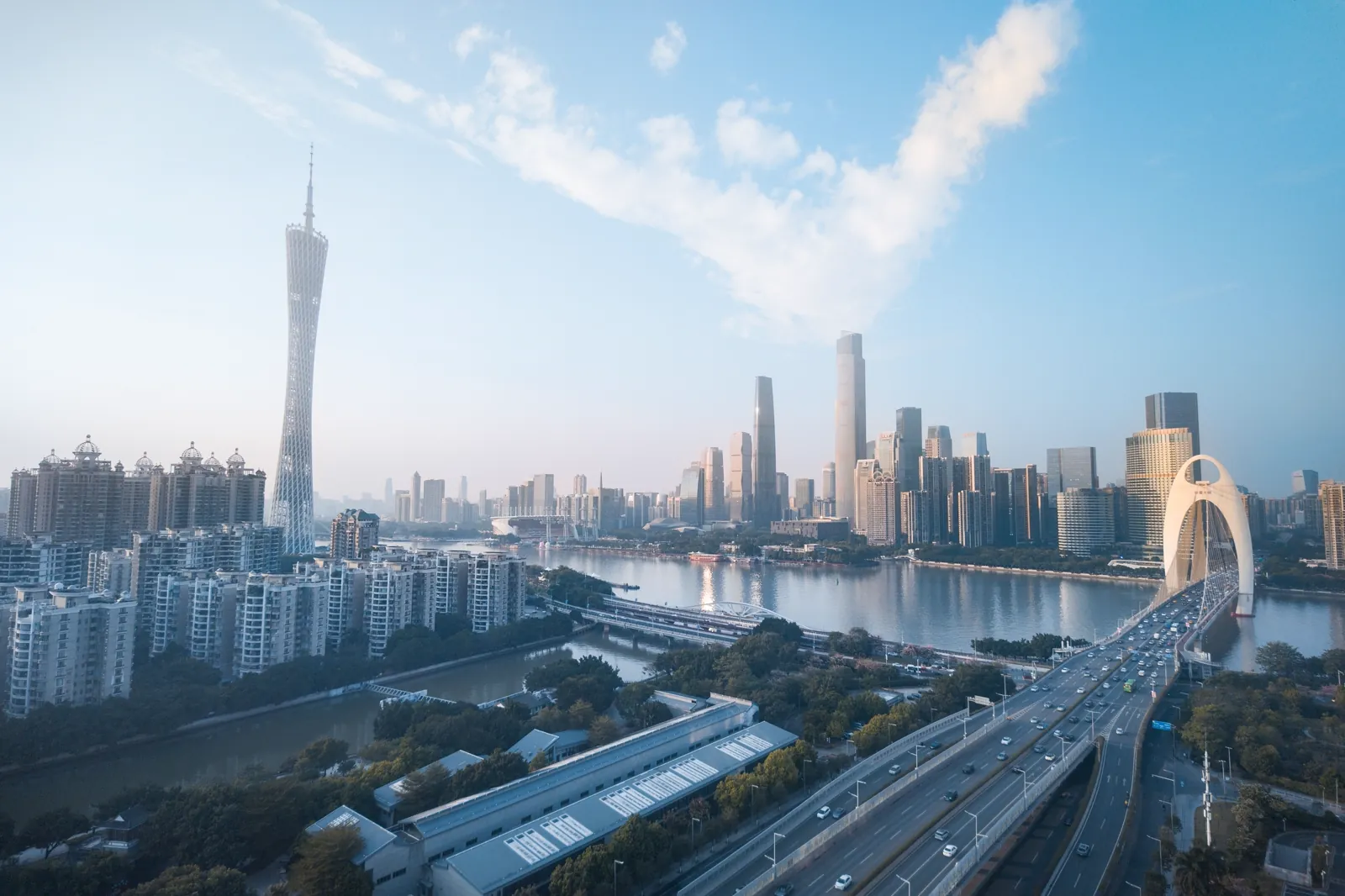
Where to Stay & How to Get Around — Hotels & Transport in Guangzhou
If You Are Arranging Accommodation Independently
Below are the main hotel areas in Guangzhou with estimated reference price ranges. These are market observations, not fixed rates. During the Canton Fair, hotel rates often rise significantly — especially near the Pazhou Complex — and the closest hotels can sell out weeks in advance.
| Area | Distance to Fair | Reference Rate (Off-Peak) | Reference Rate (Fair Period) |
|---|---|---|---|
| Pazhou (fair complex area) | 0–2 km | RMB 600–1,200 / night | RMB 1,800+ / night (may sell out early) |
| Zhujiang New Town | 5–8 km | RMB 400–1,000 / night | RMB 1,200–2,500 / night |
| Tianhe District | 10–15 km | RMB 250–800 / night | RMB 600–1,800 / night |
| Yuexiu District | 12–18 km | RMB 200–600 / night | RMB 500–1,200 / night |
All prices are reference ranges. Actual rates depend on the specific hotel, room type, booking date, and availability. Book as early as possible — six to eight weeks before the fair is advisable.
Booking a QGO Canton Fair package? Your accommodation is already included according to the selected package.
| QGO Package | What's Included for Accommodation |
|---|---|
| Essential (QGO-CF-699) — US$699/person, 5 Days / 4 Nights | 4 nights in a 3-star business hotel. Daily breakfast included. |
| Private Concierge (QGO-CF-3799) — US$3,799/person, 6 Days / 5 Nights | Private room in a selected 4-star business hotel or equivalent. |
| Twin-Sharing Concierge (QGO-CF-3199) — US$3,199/person, 6 Days / 5 Nights · Minimum 2 guests | Selected 4-star business hotel or equivalent, shared room. Two guests who know each other book and travel together. QGO does not match unrelated travelers for room sharing. |
Payment does not itself guarantee a specific hotel. Full payment starts QGO's availability review. Final hotel, vehicle, interpreter and other applicable arrangements are confirmed separately in writing by QGO Business.
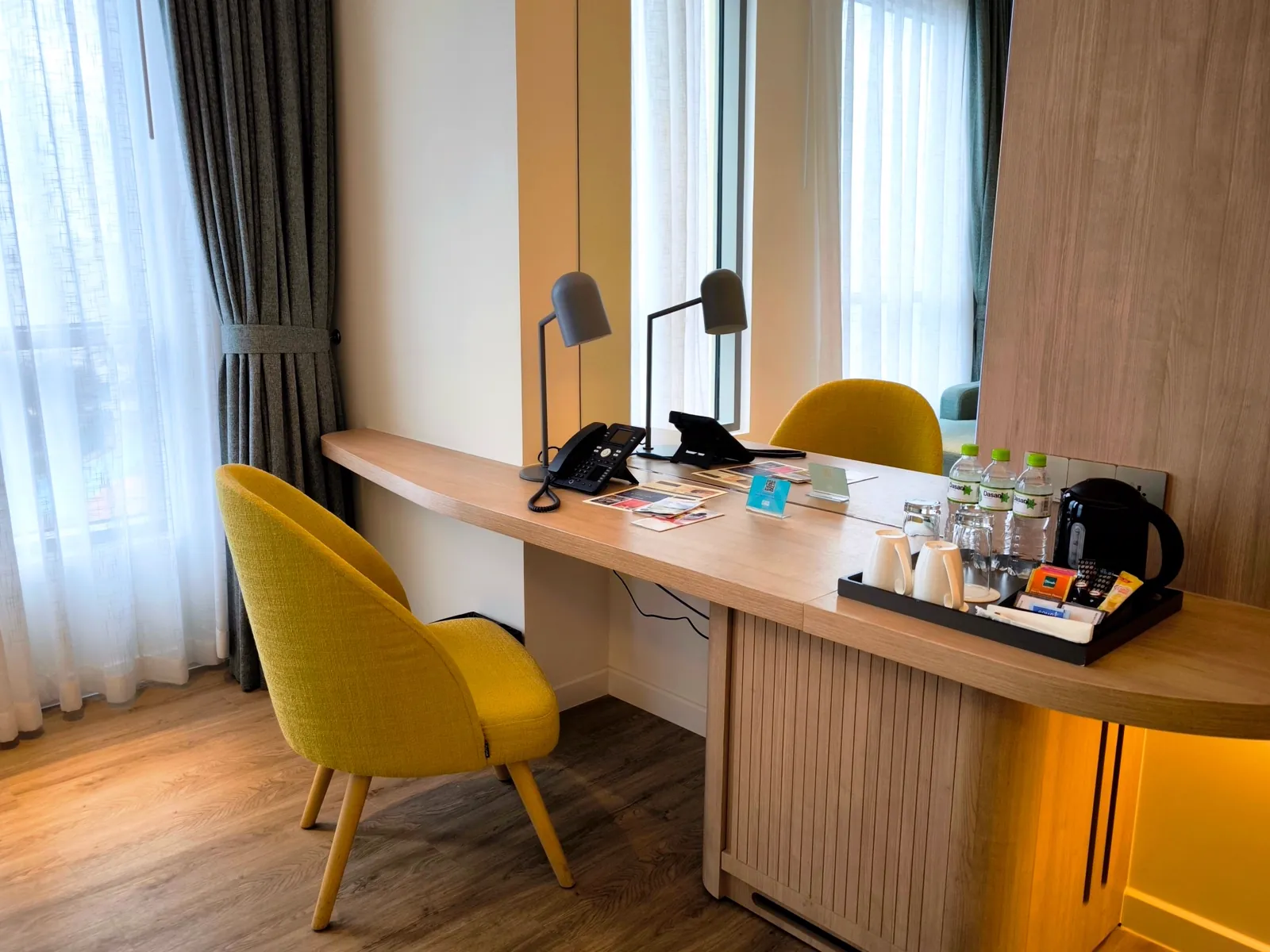
Getting Around Guangzhou
Metro: Line 8 runs directly to the Canton Fair Complex. Alight at Xingang Dong (Exit A, near Area A) or Pazhou (Exits A/B/C, near Areas B and C). The metro is clean, efficient, and the most reliable way to reach the fair during rush hours. A one-way trip costs approximately RMB 5 from most central stations.
From Guangzhou Baiyun Airport: The airport is approximately 45–60 minutes from the fair complex. Metro Line 3 connects the airport to central Guangzhou, where you can transfer to Line 8. A taxi from the airport to the Pazhou area costs approximately RMB 150–180, depending on traffic and time of day. These are reference figures — actual fares vary.
Free shuttle buses: During the Canton Fair, free shuttle buses typically operate between designated hotels and the Pazhou Complex. Shuttle routes, schedules and participating hotels for the 140th session are subject to the fair's official announcement. Check the Canton Fair website or ask your hotel front desk closer to the fair dates.
From Hong Kong: If you fly into Hong Kong, the high-speed rail from West Kowloon Station to Guangzhou South Station takes about 50 minutes. From there, transfer to Metro Line 2, then Line 8 to Pazhou.
Getting Around Independently vs Arranged Transport
Both work, and most buyers mix them. Guangzhou's metro is inexpensive, reliable and runs directly to the fair complex, and ride-hailing apps operate normally in the city — for fair days alone, independent transport is usually enough. The trade-off appears on supplier and factory days. Factories sit in industrial parks with gate registration, appointment windows and limited English, and a driver who knows the park entrances saves more time than a faster car. A common pattern is independent transport for fair days and an arranged vehicle for factory-visit days. For how those visit days are planned, see the Canton Fair factory visit guide.
Pre-Trip Checklist — What to Prepare Before You Leave
Don't wait until you land to figure these out. Do them in the weeks before your flight. For the daily carry list, see What to Bring Each Day at the Fair.
- Valid passport — at least 6 months remaining validity, blank visa pages
- Entry requirements — Check whether your nationality qualifies for visa-free entry. If a visa is needed, the M visa is the common category for trade activities. Apply 4–6 weeks before travel. Always verify current rules with your local Chinese embassy or consulate
- Canton Fair pre-registration — complete at buyer.cantonfair.org.cn; pre-registration is typically free for overseas buyers. Check the latest 140th session guidance for current procedures and any applicable fees
- Canton Fair invitation — if you need an invitation, use the official Buyer Service System at buyer.cantonfair.org.cn
- Passport photos — bring 2–3 physical copies, 5cm × 4cm, as backup for on-site badge collection
- Business cards — bring at least 50. Having the Chinese translation of your name and company on the reverse side is helpful but not required
- WeChat — download and complete identity verification using your passport. Almost all Chinese suppliers communicate through WeChat. Do this at home where you have reliable internet and access to your documents
- Alipay — download and link a qualified overseas bank card. Both Alipay and WeChat Pay now support foreign-issued cards (Visa, Mastercard, and others). Terms are governed by each payment provider. Check their latest guidance for eligibility and limits
- VPN — install and test before departure. You'll need it to access Gmail, WhatsApp, Google, and other services. Different providers have varying reliability in China; test yours, and have a backup option
- Translation app — Google Translate with the Chinese language pack downloaded for offline use. Alternatively, Pleco or Youdao Dictionary
- Navigation app — Amap (Gaode Maps) is the most accurate mapping app in China. Download it and familiarize yourself with the interface. Apple Maps has partial coverage. Google Maps requires a VPN
- Hotel booking confirmation — printed or saved on your phone
- Comfortable walking shoes — you will walk far more than you expect. The Pazhou Complex is enormous
- Power bank — high capacity. Outlets are scarce on the exhibition floor and your phone will drain quickly from photos, translation apps, and WeChat
- Chinese SIM card or eSIM — available at the airport upon arrival. Having data from the moment you land avoids relying on airport WiFi. Service plans and compatibility vary by provider and device
What to Bring Each Day at the Fair
Carry the same short set every day: your passport or a secure copy of it, your buyer badge on a lanyard, a high-capacity power bank, business cards, a charged phone with a translation app and WeChat installed, and somewhere to note booth numbers as you go. Wear your most comfortable shoes — a typical fair day involves 10–15 km of walking, and the halls are connected by long corridors. Leave room in your bag for catalogues and samples. Outlets are scarce on the exhibition floor, so charge overnight rather than during the day.
Surviving the Fair — Practical Tips for Your First Day
The Canton Fair is physically demanding. Here's what experienced buyers know that first-timers learn the hard way.
Wear the most comfortable shoes you own. The complex spans multiple exhibition halls connected by long corridors. You'll walk 10–15 kilometers on a typical day. New shoes or dress shoes are a mistake.
Arrive early. Doors open at 9:30 AM. The first two hours are the quietest. By midday, aisles are packed. Use mornings for your most important supplier meetings, afternoons for browsing and discovery.
Collect WeChat contacts, not just business cards. Business cards get lost. A WeChat contact lets you message the supplier directly, share product photos, and follow up after the fair. When you take a business card, scan the WeChat QR code on the spot if the supplier offers it.
Take a photo of the product AND the booth number. By the end of Day 1, you'll have hundreds of photos. Without the booth number, you won't remember which stand each photo came from. Take a photo of the booth sign first, then the products. Or hold the supplier's brochure next to the product in the photo.
Don't sign anything on the spot. The fair is for discovery, comparison, and relationship-building. Serious negotiations happen later — at the factory, with time to review details. Collect information, note your impressions, and decide after you've seen multiple options.
Pace yourself. Trying to cover an entire phase in one day is impossible. Prioritize the exhibitors you most want to see, visit them first, and accept that you won't see everything. Build in a rest day between phases if you're attending multiple phases.
Food strategy. Food options inside the complex are limited and more expensive than outside. Eat a solid breakfast at your hotel. Pack snacks. For dinner, explore Guangzhou's restaurant scene — it's one of China's best food cities.
The fair gets quieter after 3 PM. Many buyers leave by mid-afternoon. The last two hours are ideal for casual browsing, revisiting stands you liked, and having longer conversations with suppliers who are less busy.
Learn a few Chinese phrases. Even basic greetings — "ni hao" (hello), "xie xie" (thank you) — go a long way. Most exhibitors have English-speaking staff, but the effort is noticed and appreciated.
Don't try to do business on WeChat alone from abroad. Face-to-face meetings build trust that no video call can replace. That's why you're here.
After the Fair — Factory Visits, Samples & Next Steps
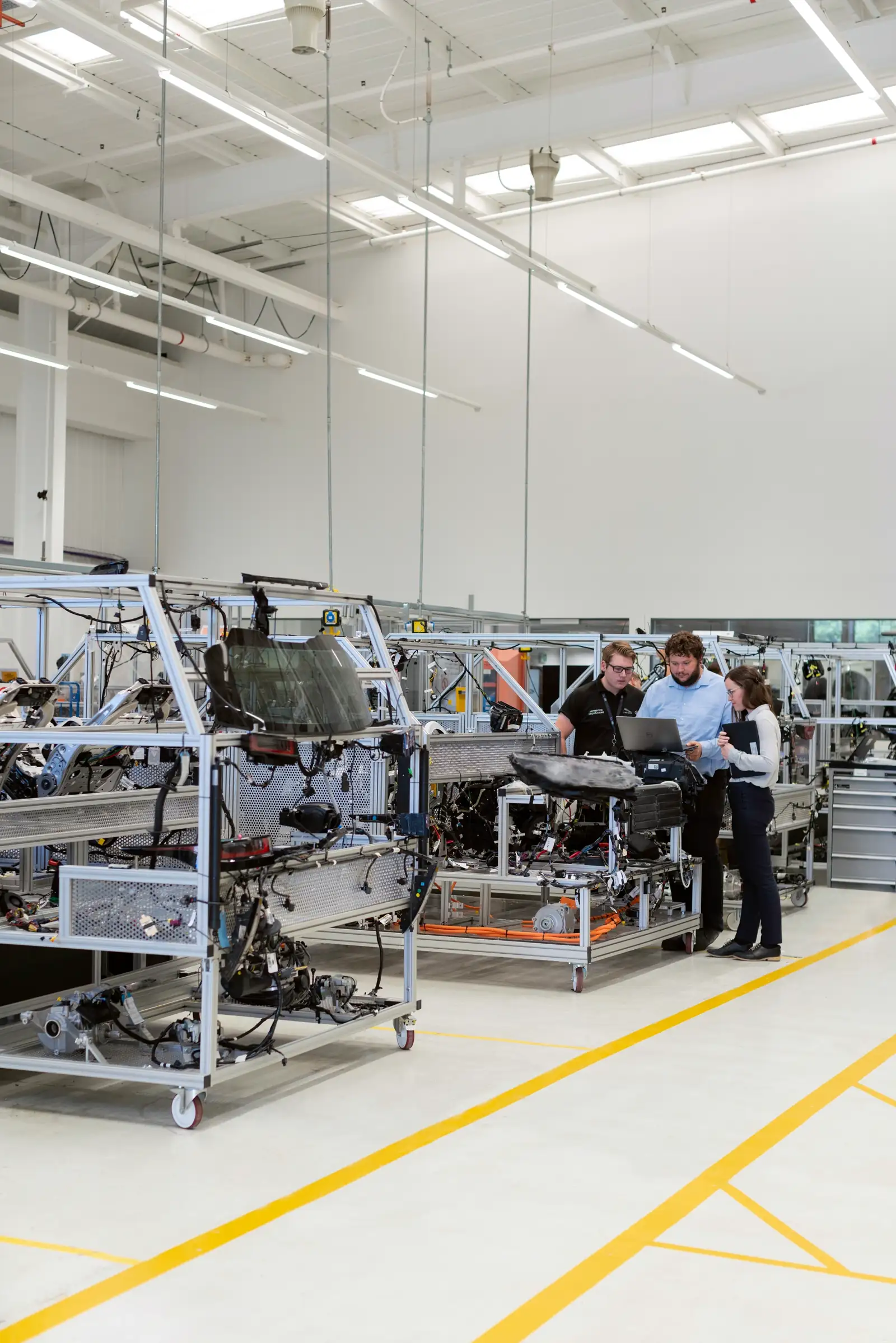
The Canton Fair is the starting line, not the finish line. The most productive days of your trip often come after the fair ends.
Why Visit Factories After the Fair
At the fair, you meet sales representatives in a booth. At the factory, you can see the production line, meet the people who make the products, observe quality control processes firsthand, and gather more information about the supplier's operations. A factory visit gives you more first-hand information about a potential supplier, but it is not a substitute for independent supplier verification, quality inspection, certification checks or legal due diligence.
Which Cities to Visit
Guangzhou is at the center of the Pearl River Delta — China's manufacturing heartland. Within a 1–2 hour drive, you can reach:
| City | Distance from Guangzhou | Key Industries |
|---|---|---|
| Foshan | ~40 min | Home appliances, ceramics, furniture, building materials, machinery |
| Dongguan | ~1 hour | Electronics, footwear, apparel, hardware, molds, smart manufacturing |
| Shenzhen | ~1.5 hours | Consumer electronics, smart devices, new energy, technology products |
| Huizhou | ~2 hours | Batteries, energy storage, electronics manufacturing, automotive electronics |
| Zhongshan | ~1 hour | Lighting, small appliances, hardware products |
Schematic planning concept. Not a geographic map.
Planning Your Factory Visit Day
The number of visits possible in one day depends on factory locations, meeting length, supplier availability and traffic. A typical visit lasts 45 to 90 minutes. Plan your route efficiently — factories in the same industrial zone should be grouped together. QGO package route planning may target 3 to 5 visits where conditions allow, subject to supplier approval, safety, route conditions and final written itinerary confirmation.
If you don't speak Chinese, you'll need an interpreter for factory visits. The conversation at a factory is more technical than at a trade show booth — production capacity, quality certifications, lead times, minimum order quantities — and miscommunication can be costly.
QGO Business can coordinate factory visit planning as part of its Canton Fair packages — arranging the route, vehicle, and English business interpreter so you can focus on evaluating suppliers rather than managing logistics. This is presented as one option among several; you can also arrange factory visits independently through local contacts or interpreter platforms.
After You Return Home
- Organize your supplier shortlist while memories are fresh
- Request samples from your top 3–5 suppliers for side-by-side comparison
- Follow up on WeChat with suppliers you want to stay in touch with
- Start planning your next trip. Many buyers return for the Spring 2027 session (expected April/May) with confirmed orders
Common Mistakes First-Time Buyers Make — And How to Avoid Them
- Attending the wrong phase. Check the product category table twice before booking flights. If your product is in Phase II, showing up during Phase I means you'll see almost nothing relevant.
- No interpreter for factory visits. At the fair, many exhibitors speak English. At the factory, far fewer people do — and the conversations are more technical. Budget for interpretation if you're visiting factories.
- Signing or committing too early. Collect information from multiple suppliers first. Compare. Then decide. A supplier who pressures you to sign on the spot should raise a flag, not close a deal.
- Skipping factory visits entirely. A booth at the fair tells you what the supplier wants to show. A factory visit lets you gather more information, observe their operations, and ask detailed questions. It is not a substitute for independent quality inspection or certification checks.
- No WeChat. You'll collect business cards you can't use, miss follow-up messages from suppliers, and be unable to communicate the way everyone else in the building communicates. Download and verify WeChat before you leave home.
- Underestimating costs. Hotel prices during the fair are not normal prices. Budget accordingly. The "I'll find something when I arrive" approach doesn't work during the Canton Fair.
- Assuming you know the entry rules. Do not assume you need a visa — or that a particular visa category applies. Entry requirements depend on your nationality, passport type and travel purpose. Check the current rules for your specific situation before booking flights.
- No rest days. If you're attending two phases, build in the changeover days for rest, follow-ups, and factory visits. Running on empty by Day 4 helps no one.
- Booking a hotel far from the fair to save money. Saving $50 a night on a distant hotel can cost you two hours a day in traffic. Time at the fair is your most valuable resource.
- Wearing the wrong shoes. It sounds trivial. It isn't. After walking 12 kilometers on hard exhibition hall floors, you'll understand why this makes the list.
Frequently Asked Questions
Do I need to speak Chinese?
No. English is widely spoken by exhibitor staff, product catalogs are available in English, and the fair complex has English signage and information desks. That said, for factory visits and detailed negotiations, an English-speaking business interpreter is valuable — not just for language but for understanding manufacturing terminology and business norms. For a full guide on hiring and briefing a Canton Fair interpreter, see How to Hire a Canton Fair Interpreter in Guangzhou.
Is it safe for foreign visitors?
Yes. Guangzhou is a major international city with modern infrastructure, extensive public transport, and a visible police presence. The fair complex itself has security, medical stations, and English-speaking information staff. Use the same common-sense precautions you would at any large international event — watch your belongings in crowded areas and keep your passport secure.
Can I bring product samples back from China?
Yes, within reason. Check your home country's customs regulations before you travel. Most suppliers can also ship samples via international courier if the items are too large or heavy for your luggage.
What's the weather like in Guangzhou in October?
Warm and humid. Daytime temperatures typically range from 25–30°C (77–86°F). Light rain is common. Dress in lightweight business-casual clothing. The exhibition halls are air-conditioned, so a light jacket or sweater is useful indoors. An umbrella is worth packing.
How far in advance should I book?
Hotels near the Pazhou Complex can sell out 6–8 weeks before the fair. Flights also become more expensive closer to the dates. Register for the fair and book accommodation as early as you can confirm your travel plans.
Can I attend multiple phases?
Yes. Many buyers attend two or even all three phases. Register once and your badge works for the entire session. Plan your hotel to span the changeover periods if you're staying between phases — the fair complex closes on those days, so use them for factory visits or rest.
What if I lose my buyer badge?
Visit the registration office at the fair with your passport. Check the latest 140th session guidance for current replacement procedures and any applicable fees. Keep your badge in a secure place — ideally a lanyard around your neck rather than loose in a pocket.
I registered online but don't understand where to collect my badge. What should I do?
Pre-registration normally produces an email confirmation. Bring your passport and that confirmation to the fair's registration area, where the badge is issued. If the confirmation has not arrived, or the collection location is unclear, check the Buyer Service System at buyer.cantonfair.org.cn for the current registration points and opening hours, or ask at an English-speaking information desk inside the complex. Keep the badge on a lanyard rather than loose in a pocket.
I'm bringing colleagues with me. Do they each need their own buyer badge?
Each overseas buyer attending in their own right registers individually and receives their own badge. The fair operates on a “one person, one badge” basis within a session, badges are issued against your own ID document, and reselling, lending or using someone else's badge is prohibited. The fair also operates a separate badge category for accompanying personnel — typically Chinese-national interpreters and assistants hired by overseas buyers — which has its own fee structure and rules. Because badge rules and fees can change between sessions, confirm the current requirements for your group size in the official Buyer Service System before you travel. Fixed packages are priced per person, which is the simplest way to plan for a group.
Is the Canton Fair worth it for a small business?
Small importers often get the most value from the fair. You can meet suppliers directly, compare products in person, and negotiate terms — things that are hard to do remotely as a smaller buyer. Many suppliers at the fair work with small and medium-sized importers, not just large retailers. The key is preparation: know your product, know your budget, and have a clear plan for which halls and suppliers to prioritize.
Can I attend the Canton Fair on my own?
Yes. Many first-time buyers attend alone, and the fair itself is well signposted with English information desks and staff. The practical constraints are logistics rather than access: you will be managing your own hotel, transport, badge and supplier follow-up in a country where you may not speak the language. Buyers travelling alone often find that factory-visit days are where independent arrangements get hardest, because plants sit in industrial parks and need a vehicle, an appointment and usually an interpreter.
Which Canton Fair phase should I attend for electronics, home, or apparel?
Use the fair's phase split to plan your visit: Phase 1 covers electronics, appliances, lighting, machinery and industrial categories; Phase 2 covers home, furniture, gifts and lifestyle categories; Phase 3 covers apparel, textiles, footwear and related consumer lines. For detailed category maps, see the Phase 1 guide, Phase 2 guide and Phase 3 guide.
Last updated: August 2026
Official sources
Sources: buyer.cantonfair.org.cn, en.nia.gov.cn, english.www.gov.cn, Chinese MFA consular services
Ready to Plan Your First Canton Fair Trip?
You've read the guide. You know the dates, the registration process, the visa requirements, what to pack, and what to avoid. The next step is execution.
QGO Business provides China-side business execution for overseas buyers attending the Canton Fair. Our fixed-price packages include the accommodation specified in the selected package, transport arrangements, English business interpretation (on applicable packages), and factory visit coordination. Final hotel and service arrangements are subject to availability review and written confirmation. QGO is not an official Canton Fair service provider.